Obsidian Mirror

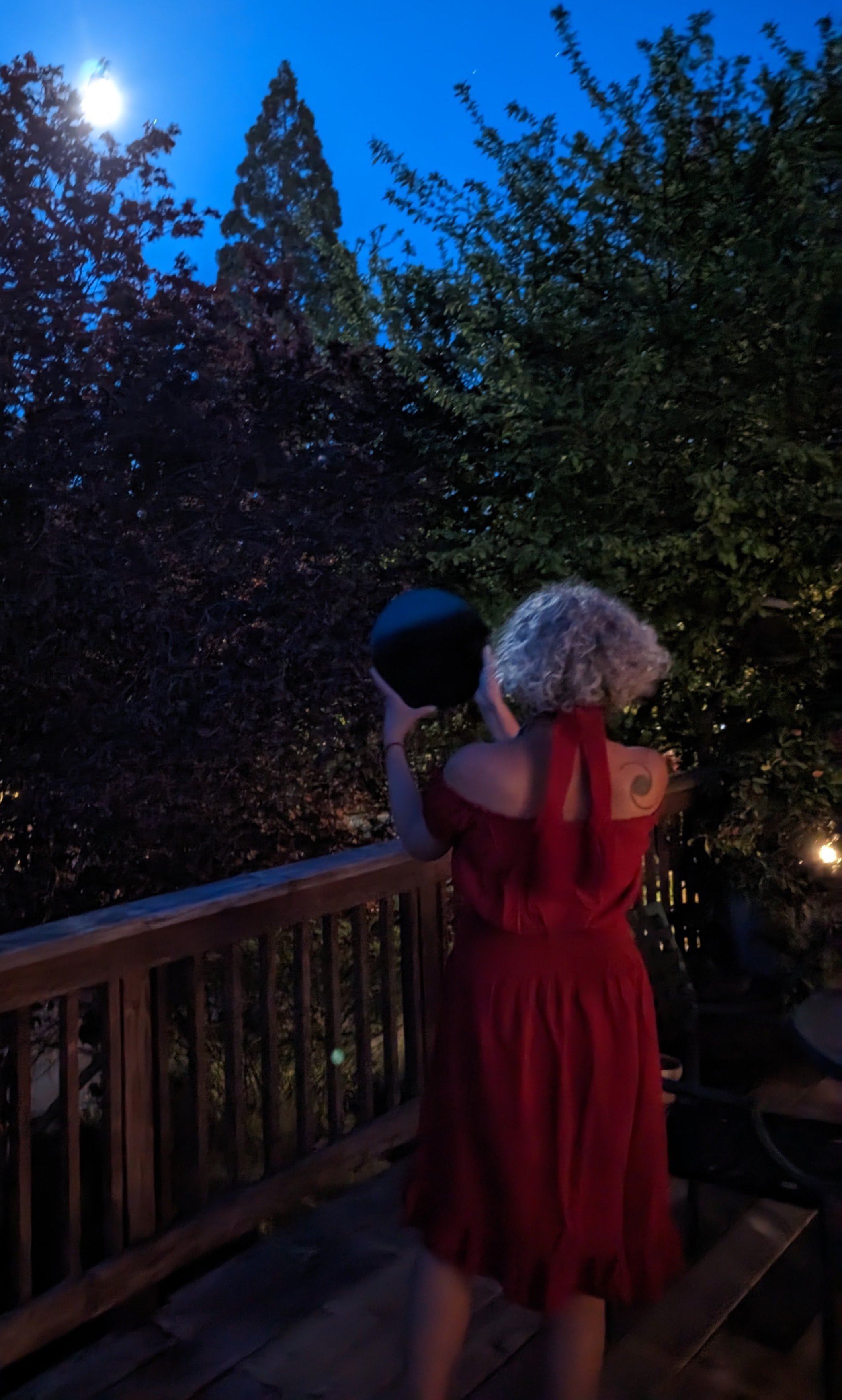
Full Moon Mirror Gazing

Sitting behind a protective glass in the British museum of London is a black obsidian mirror called the spirit mirror. This sacred object made of volcanic glass once belonged to John Dee, personal astrology, magician and mathematician to Queen Elizabeth I. This scrying item has caused much speculation over the centuries and engages ones curiosity for it contains much unknown magical lore.

It is a well documented that John Dee, who the Queen called her philosopher, along with a con man known for his mediumship, Edward Kelley, used the mirror for over ten years to contact angels. If questioned, Edward Kelley said they were in touch with demons and begged to end the rituals, but John Dee received many profound messages from the mirror and continued with these practices to contact other worlds and the deceased.

The mirror itself had come from the Aztec Empire shortly after Cortes conquered their nation. The Aztec priests were adept in using the mirror to conjure one of their Supreme essences, Tezcatlipoca, also known as the Great Smoking Mirror for the purpose of futuristic visions leading to prophetic messages.

Meanwhile, in the National Palace Museum in Taipei, another of these mirrors is on display with much speculation as to who it belonged. Many Qing Emperors have sang songs and written poetry for the mirror calling it the Ink-Jade mirror. Modern day researchers have since confirmed that indeed, this relic is an artifact, a rare obsidian mirror from the Mesoamerican Aztec culture fashioned from the naturally occurring volcanic glass. 

This has resulted in the piece being renamed to the “Aztec Obsidian Mirror”. Mirrors were important relics in the religious traditions of Meso-American cultures, as they were believed to be portals to intangible realms, such as the past and the future.

The Taiwanese learned, just as the British, that the mirror in their possession is traditionally associated with the god Tezcatlipoca, often representing a wide range of concepts, including the night sky, night winds, the jaguar, sorcery, war and conflict.

The Aztecs didn’t disappear, the mirrors didn’t stop being produced and Tezcatlipoca, the God essence, the ONE who can give or take all, is still revered to this day in the indigenous Mexhica culture of Mexico. Traditional dancers, dreamers, curanderas and spiritual leaders are all adept at using their obsidian mirrors, which are still being crafted from Mexican volcanic glass.

In general, mirrors have held a long fascination in the esoteric world. It has always been a tool of divination and magic, a portal that allows us to see into another realm. Mirrors aid one to focus the untrained eye “to see” and perceive what is otherwise unseen. Their purpose is to look into the future, aid in healing, answer questions, solve problems, find lost objects and people, and identify or find thieves and criminals.

Early Egyptians, Arabs, the Magi of Persia, Greeks, and Romans all have documented use of scrying. To gaze upon a shiny surface is the earliest form of divination. “Romans who were skilled in mirror reading were called specularii. Much later, Catherine de Medicis reputedly had a magic mirror that enabled her to see the future for herself and for France. Pére Cotton, the confessor to King Henri IV of France, had a magic mirror that revealed to him the plots against the king.” -https://occult-world.com/mirrors/

The Mayans seem to have had interest in the spirit mirror as these objects were found in every region of the Maya civilization and throughout every period of their existence. Mirrors were of considerable value within Maya society and their use was restricted to the elite. The level of craftsmanship of mirrors seems to indicate they were intended for use by royalty and the aristocratic class alone. Mirrors were hand-held or put into ornate bases, or dwarfs and servants were used to hold the mirror for their rulers. Both for the Maya and the Mexica the very word ‘mirror’ was synonymous with ‘ruler’

“Advances in the decipherment of Maya script have revealed the central function of mirrors as instruments for ritual scrying. This ritual scrying was the continuation of an ancient divinatory tradition with its ultimate origins in Pre-Classic shamanistic practices that had been formalized by the Maya priesthood.” – Wikipedia. A Mayan Priest, an interpreter of destinies would say, ‘You have come to see yourself in the mirror; you have come to consult the book’. Mirrors represented wisdom, knowledge and power.

The first time I saw an obsidian mirror, my spirit literally jumped out of my body. I had an instant recognition of a sacred tool that I knew in my heart I wanted to know more intimately. I knew the mirror had called me. I have often heard indigenous wisdom teachers say, ‘Don’t go looking for your medicine, it will find you!’ And so it did. Learning to actually work with my mirror was a whole other undertaking.

I needed a teacher. It took me three teachers to find the one with whom I deeply resonated. What I learned with Alma Santiago Martinez, Nahautl lineage keeper, is that a gazer can get lost in the mirror. Permission, respect and knowledge are needed to approach the obsidiana.

The supernatural portal of the mirror can bring you into deep reflections with many archetypes that live within yourself. You learn to see the cosmic eye and how you reflect yourself into the world. You learn to meet your ego and release aspects of yourself and your stories that don’t serve you back into the black mirror. You learn to hear the self destructive voice that keeps you in repetitive destructive patterns and also release this to the mirror. You find your voice and your courage. Symbolically you connect with the sun, the moon, eyes & faces of the ancestors and the wisdom of the flowers & herbs. The mirror can answer questions, it can offer warnings, it can bring protection. It is a gift, from God, from Tezcatlipoca, He Who We Must Obey. 

I am blessed and grateful to be working with such a sacred ancient tool of magic! Do you too feel a call to the mirror? The true self is there. Right there. In front of you. In the mirror. In the pool of water. In the significant other, in the ancestors, in the reflection that you dare to gaze upon. Would you like to learn to use a mirror? I asked mi maestra to create a teaching around Tezcatlipoca and beginning use of the Obsidian Mirror: https://moonflowermedicine.love/classes-teachings/obsidian-mirror-teaching

Tlazocamati Tezcatlipoca

Denai Grace Seacombe-Fuller, Cihuatochtli, is a Mama of five, Tarot Guide, Acolyte of IxChel, spiritual healer, flower essence practitioner, flower alchemist and student of Nahualism. 

ITZ Copal

Photo: Milk&Peonies

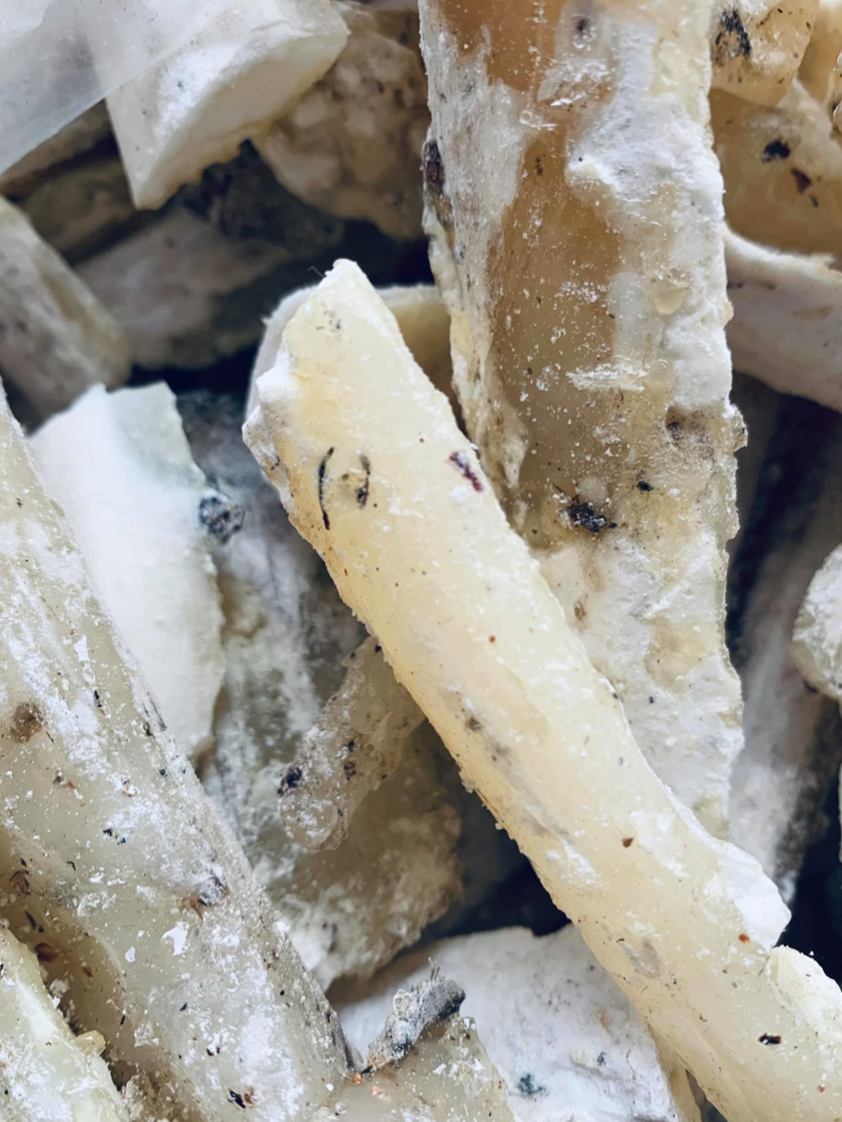
The sun, the moon, and the stars arrived on Earth bringing copal with them, such is the importance of this sacred sap, says the Popul Vuh, the Mayan creation book, a document that has been preserved since the Spanish conquest. 

The neighboring ‘cousin’ tribe of the Maya were the Aztec and they had a different creation mythology that claimed the primordial gods Tezcatlipoca and Quetzalcoatl made the Earth from the bloodthirsty goddess Tlaltecutli, and then they transformed themselves into four cosmic trees, representing the four quarters of the universe. Emanating divine energies & forces, these sentient trees uphold the heavens, stabilize the Earth and create a passageway into the underworld with their roots, all the while, we humans must feed Tlaltecutli her much craved blood.   

In the Mayan mythologies, Xibalba, God of the Underworld is about to order the death of Xquic, one of his overlord’s daughters, but Xquic convinces the henchman who would carry out the sacrifice, rather to use copal as a substitute for her blood. Copal and blood become interchangeable substances. 

Copal resin sweats and bubbles, like blood, prior to transforming itself to a heavy sweet smoke and can be offered to the Gods (in the place of human blood).  Indigenous people are intrigued with blood and copal is considered the blood of trees. To maintain a balanced, harmonious cosmos, free of chaos, the Gods demand offerings. In this way we are able to appease the God/dess and communicate with the Otherworld.

Copaleros, those who extract copal, continue to harvest this sacred resin in a manner similar to their ancestors.  Choosing designated areas in the forest landscapes of their home, and cautious to rotate their chosen trees every few years, copaleros use a wooden mallet and large metal knife, with prayers and respect, they place a small cut into the tree. Below these abrasions, which appear to ‘bleed’, the resin is caught, as it oozes from the tree trunks, by large maguey spikes held in place with rope. 

For the ancient indigenous people of Central America, trees are sentient & Holy and there is an ongoing relationship of reciprocity between them with humans.  These sacred trees offer their sap as sacrificial blood.  The Bursera Bipinnata tree, which grows throughout Central America, continues to be the most desired source of the much coveted white copal.  In Nahuatl, this tree is called copalquahiitl.  Another favored type of copal, more yellowish in color and resembling frankincense in scent, is harvested from the Protium Copal tree. 

Photo: Unknown

Copaltemaliztl, “the act of burning of copal,” is a ritual grounded in Central American religious practices.  Revered throughout that geographic region, copal is used in a ritualistic way to cure ailments of the body, mind and spirit.  

Imagine then you have lit your charcoal, having placed it in a heat proof container called a popoxcomitl, as you prepare to burn and offer copal.  As this hallowed sap burns, you take in the sweet resinous scent of this magnificent being. With white smoke billowing out and swirling around, you feel uplifted.  Known as the ‘white lady’, you can sense she is dialoguing with the Gods, heartily petitioning the heavens on your behalf.

According to visionary and healer,  Maestro Pablo Amaringo Shuna, copal or what he lovingly called an ‘empire of spirits’ deeply cleanses the aura.  Akin to an opaque metal that needs to be polished, it helps us to shine again. It is the incense of the rainforest, used since ancient times, used since before the world became disharmonious. Copal takes away negative and dense stains on a person’s aura, pulling away all the discord, sending it up into the atmosphere, where the trees will receive our ‘sickness’ and transmute this heaviness, allowing for our renewal.

The truly magical scent of copal brings about relaxation, balancing the body. This can reduce blood pressure as well as increase concentration. The scent has also been used as a treatment for insomnia and headaches. It can also expand the mind and increase a person’s creativity. 

Juan Manuel, a Mexican medicine man who’s is called ‘El Indio’ says, this copal medicine has the power to evoke other worlds through its fragrance.   “The sense of smell is the sense that never sleeps.  Hence the aromas evoke memories – perhaps reminiscences- or function as direct thresholds to the depths of consciousness.” –Ancestral Mexico 

El Indio, with a group of healers known as Ancestral Mexico, offer copal ceremonies in the Yucatan where you will experience smudging of the heavenly copal medicine around your body, as well, orally ingest this sacred sap in the form of copal tea.  According to their ancient teachings, this form of medicine can awaken memories of who you are, where you come from, your true relationship with creation, with everything in the cosmos and galaxy, with Earth and all living beings that inhabit this place.  The tea awakens one’s DNA, heals ancestral issues that reside deep in the bones, aids the stomach & intestinal tract and helps with respiratory ailments.  

Itz is a Mayan word for all Holy liquids such as dew, blood, semen, holy water, resins, sweat, tears, candle pitch and tree sap- such as copal.  Itz is a vital force, what is commonly known as chi energy, but what the Mayan call ch’ul.   Cosmic sap flows from the World Tree and is offered to us as sacramental medicine to fortify our ch’ul.

Itz is also a word that can translate to magic. Itzamna, a Mayan God, was the first sorcerer of creation.   A Mayan medicine person is called an Itzam or one who makes Itz, the holy substance that can be used to contact other worlds. 

Both the Maya and Aztec cultures consider a person’s 52nd birthday to be an auspicious day, it is known as the new fire.   On my new fire, I traveled to the Yucatan to have a copal ceremony with El Indio & the Ancestral Mexico family.  At a sacred cenote, they built me an elaborate altar, dedicated to the four directions as they called on all the forces of the cosmos to come and bless me.  They surrounded me with the white lady as they sang & danced and they sent all our collective prayers to the heavens.  We drank copalli.  In the end, they gifted me a small bit of fresh copallli blanco; a treasure.  

Photo: Milk&Peonies

In due time, the copal spoke to me.  With my own store pile of copal resin from my beloved homeland of Belize, I was moved to create copal tincture for tea-making, a product which I’ve called ITZ Copal, so that I can continue to drink copal tea and offer it to my clients.  May we ALL awaken to the true memory of WHO we are and WHY we are here.  

This sacrificial blood of the trees has been with us since the dawn of time and it is here now to assist us with the personal challenges we all face in remembering our interconnectedness.

Tlazocamati Copalli

If you would like to work with a bottle of ITZ Copal, goto http://www.moonflowermedicine.love/shop/copal

Denai Grace Seacombe-Fuller, Cihuatochtli, is a Mama of five, Tarot Guide, Acolyte of IxChel, spiritual healer, flower essence practitioner, flower alchemist and student of Nahualism.